Mobile Hotspot vs. RV Park Wi-Fi vs. Satellite: Which Is Actually Worth Paying For?
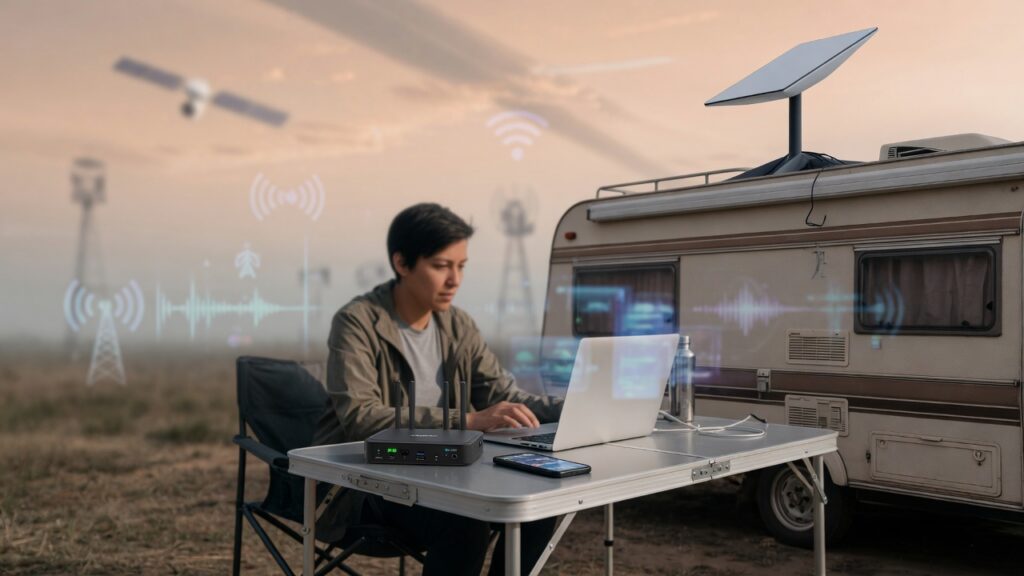
After spending time in the previous post laying out what each RV internet option actually is, let’s get to the comparison that matters: which one should you spend money on, and how do you decide?
There’s no universal answer, but there is a framework that makes the decision a lot clearer.
The comparison across what matters most
Speed
Mobile hotspot wins in areas with strong cellular signal. On a 5G connection with a good plan, you can see 100–300 Mbps or more — enough for multiple simultaneous streams and video calls without complaint.
Starlink is comparable in open areas: 50–200 Mbps depending on location, network load, and sky obstruction. Consistent enough to work as a primary internet source.
Campground Wi-Fi is highly variable. At a premium resort with a good infrastructure investment, you might get 20–30 Mbps. At a typical KOA or state park campground, 2–5 Mbps shared across the park at 7pm is more realistic. Highly dependent on which campground, which night, and where you’re parked.
Reliability
Cellular: reliable where signal exists, unreliable in dead zones. The more remote your camping, the more this matters.
Starlink: highly reliable in open sky conditions. Trees, buildings, and canyon walls introduce outages. The app has a tool that tells you how much obstruction is at your planned location.
Campground Wi-Fi: the least reliable of the three. Dependent on the campground’s infrastructure, their ISP, and how many other guests are connected. Not something you can count on for work or time-sensitive tasks.
Coverage
Cellular: covers most of the US where people regularly travel. Gaps exist in rural areas and national parks; Verizon covers more of them than T-Mobile or AT&T.
Starlink: covers nearly the entire continental US, including remote wilderness areas where no cellular signal exists. This is its primary advantage over cellular.
Campground Wi-Fi: only at the campground. Not applicable elsewhere. Range within the campground is often limited to a few hundred feet from the access point.
Cost
Mobile hotspot: your phone plan may already include hotspot data. A dedicated hotspot device runs $50–150 for the hardware; data plans vary from $25/month (Visible) to $60–80/month (T-Mobile or Verizon unlimited hotspot plans). Budget around $40–60/month for a workable dedicated hotspot setup.
Starlink RV/Roam: currently around $150/month for mobile service in North America, plus a one-time hardware cost of roughly $600 for the dish and router. More expensive than cellular for most use cases, but not wildly so for what it delivers.
Campground Wi-Fi: usually included in the campsite fee or a few dollars per day extra. The cheap part of the equation — what you’re paying for in cost savings, you’re often giving back in reliability and speed.
Security
Cellular: reasonably secure. Your data goes over the cellular network and standard HTTPS protects content.
Starlink: you control the equipment. Same security posture as a home internet connection. A VPN can add a privacy layer if desired.
Campground Wi-Fi: the weakest option by a significant margin. Shared networks with potentially hundreds of users, minimal security, and no visibility into who else is on the network. For anything sensitive — banking, work VPN, crypto — avoid campground Wi-Fi or use your own VPN over it.
How to actually decide
If you mostly camp at established campgrounds and parks with decent cellular coverage: A cellular hotspot plan covers most of your needs. Supplement with campground Wi-Fi for low-stakes browsing. Budget: $40–60/month.
If you need reliable internet for remote work, regardless of location: Cellular as a base, Starlink for reliability in remote areas. The combination is more expensive but eliminates the “no signal” problem. Budget: $100–200/month.
If you go truly off-grid regularly: Starlink is the only option that follows you into areas without cell service. The upfront hardware cost is substantial, but the monthly cost normalizes over time. Budget: $150/month plus the hardware amortized.
If you travel occasionally and have light needs: Your existing phone plan’s hotspot feature probably covers you. Add a campground Wi-Fi booster antenna if you spend significant time at parks and need more range. Budget: minimal.
The honest advice
Don’t buy Starlink hardware before you know whether you actually need it. It’s a meaningful upfront investment, and a lot of RVers discover their travel patterns are well-served by cellular alone. Test cellular for a few months on the road. If you hit a real coverage wall that disrupts your life, that’s when Starlink starts making sense.
Campground Wi-Fi shouldn’t factor into your planning as a reliable resource. Treat it as a bonus when it works. Build your primary connectivity around cellular or satellite.
And if security matters to you at all — use a VPN whenever you’re on a shared network, including campground Wi-Fi. It takes two minutes to enable and closes a meaningful gap.

Connor writes practical guides on Wi-Fi, mesh networks, and home security — breaking down complex IT topics into clear, beginner-friendly steps.
More about me →